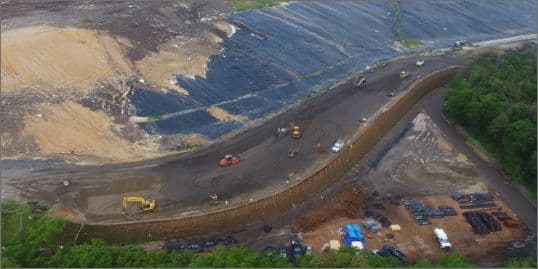
Atlantic County Utilities Authority (ACUA) operates a solid waste landfill at Egg Harbor Township, New Jersey. The facility was running out of storage volume. Hence, there was a need to store more solid waste over the next 20 years.
Landfill expansion traditionally involves using open land adjacent to the existing landfill and designating it for lateral expansion. This entails an
expanded footprint for the landfill. It has become increasingly difficult for landfill owners and operators to expand laterally due to cost, space constraints, community objection, and environmental regulations.
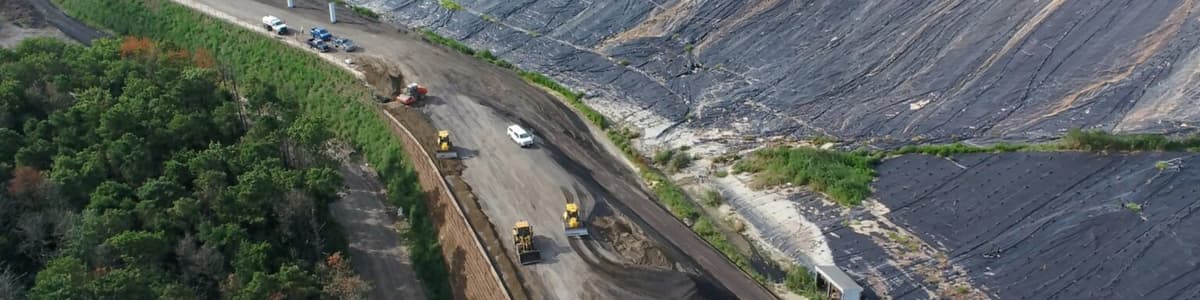
Due to space constraints around the landfill, the optimal option was to raise the height of the existing landfill. The existing fill was supported by an enclosed containment berm, designed as an MSE wall. However, this structure was not adequate to accommodate additional volume of waste over the next 20 years. With the space available to ACUA around the existing berm, it was decided to construct another peripheral berm of MSE beyond the existing berm, designed for the additional height. This called for an aggressive and a well-planned construction schedule.
The Strata team worked diligently to meet the expectations. The reinforced backfill material to be used was Reclaimed Asphaltic Pavement (RAP), a material removed and/or reprocessed when roadways are resurfaced. Extensive testing was performed on the proposed backfill and StrataGrid™ at a third-party laboratory to ensure suitability for the project.
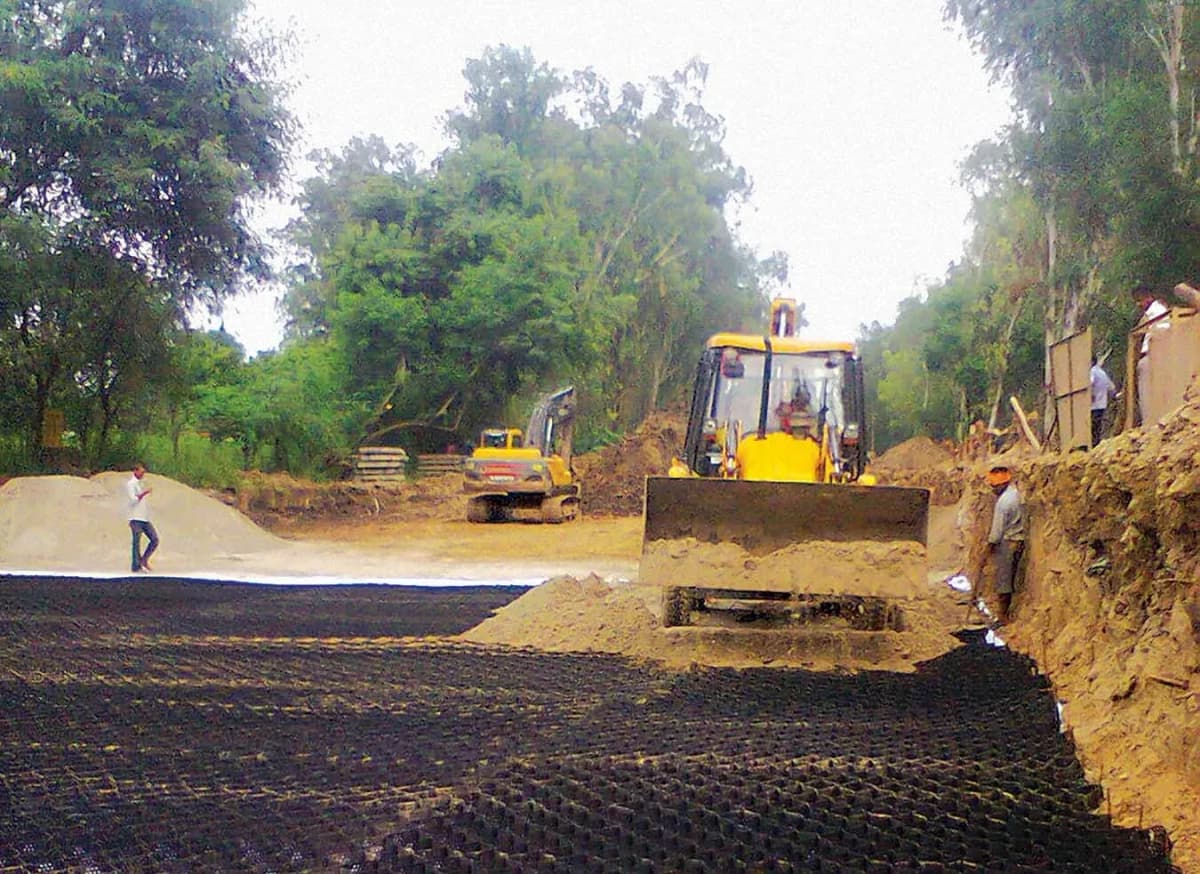
Strata supplied this project with master rolls of StrataGrid™. Each roll was 12.5 feet wide and 1,440 feet in length. A spooling operation was established by the contractor to ensure an efficient and fast deployment of the primary geogrid reinforcement. Master rolls of StrataGrid™ limit waste on site, saving time and money.
The key advantage of a Strata MSE berm is that the landfill owner can expand its waste capacity without expanding the footprint of the existing landfill. The cost and speed of construction are key deciders that favor our product. The use of StrataGrid™ wrap and wire form facing ensures a flexible structure, and the effects of differential settlement do not manifest on the structure.